The One Big Beautiful Bill Act is set to bring major changes to the solar industry. With the 30% Residential Clean Energy Credit (Section 25D) set to expire on December 31, 2025, solar and solar-plus-roofing companies are staring down a high-stakes deadline. This isn’t just a tax policy change — it’s a market-wide pressure cooker that will reshape how providers sell, staff, and scale over the next 18 months and beyond.
Here’s what’s coming — and how Hatch can help you seize the moment while preparing for leaner times ahead.
The TLDR summary
- The 30% Residential Clean Energy Credit ends Dec 31, 2025, creating urgency for solar companies to accelerate sales before the deadline.
- Expect a demand drop and tighter margins in 2026, especially for solar-plus-roofing providers reliant on tax-sensitive buyers.
- Now is the time to streamline your sales cycle, reallocate marketing spend, and plan for leaner operations post-2025.
- Automation will be critical — both to handle volume now and maintain efficiency when headcount shrinks later.
The urgency is now: Close more sales before December 31, 2025
Due to provisions in the One Big Beautiful Bill Act, the 30% federal tax credit for residential solar is officially ending on December 31, 2025. That means homeowners must have their systems installed and operational before year-end to qualify — a deadline that has major implications for how solar companies operate between now and then.
- Decision windows are shrinking: Homeowners who were “thinking about it” now need to act fast.
- Sales cycles are compressing: From lead to close, there’s no time to waste.
- Providers need to scale lead conversion: Every follow-up, every touchpoint, every appointment confirmation matters.
In short: there’s a rush coming, and solar companies must act now to capture the full wave of demand before the clock runs out.
What happens in 2026? A demand dip and margin squeeze
Once the credit expires, many homeowners may delay or abandon their solar plans — and the effects on solar companies could be immediate and significant.
- Sales pipelines may dry up: especially for those relying on price-sensitive customers.
- Margins will tighten: particularly for companies offering bundled roofing + solar solutions.
- Overhead will face scrutiny: and sales and call center teams may be the first to shrink.
It’s a one-two punch: a short-term sprint in 2025, followed by a marathon of efficiency in 2026 and beyond. The winners in this landscape will be the ones who can convert fast today and scale smart tomorrow.
What you can do to prepare
While the expiration of the tax credit poses clear risks, it also offers a window for strategic planning. Here are five moves solar companies should prioritize over the next 18 months to stay competitive — before and after the 2025 deadline:
- Audit your sales cycle and identify bottlenecks.
With shorter decision timelines, companies can’t afford slow follow-up or inconsistent communication. Map your sales process and look for places where leads are leaking or slowing down. - Rethink your marketing spend.
Invest in campaigns that generate high-intent leads now — homeowners motivated by the tax credit window. Consider reallocating budget toward lead conversion vs. pure lead generation. - Run “what-if” margin scenarios for 2026.
Start modeling what your P&L looks like with lower average order value or volume. Understanding where you’d cut costs or shift strategy early puts you in control. - Build flexibility into staffing plans.
Headcount decisions made during the 2025 sales rush may not be sustainable into 2026. Plan for flexible, scalable resources you can ramp up or down without massive disruption. - Automate where it counts — now, not later.
Whether it’s lead follow-up, appointment reminders, or pipeline nurturing, automation tools can help you close more in 2025 and reduce reliance on costly staff in 2026.
How Hatch helps you win now and thrive later
Hatch is built for these moments: when speed, scale, and savings matter most.
1. Maximize the 2025 window
Hatch helps you close more leads — faster — while the tax credit is still on the table. Here's how:
Hatch automates tailored, multi-channel outreach sequences for key touch points across the customer journey, including:
- Speed to lead
- Estimate follow-up
- Appointment confirmations and reminders
- Aged lead and estimate nurture
- Installation follow-ups, and more.
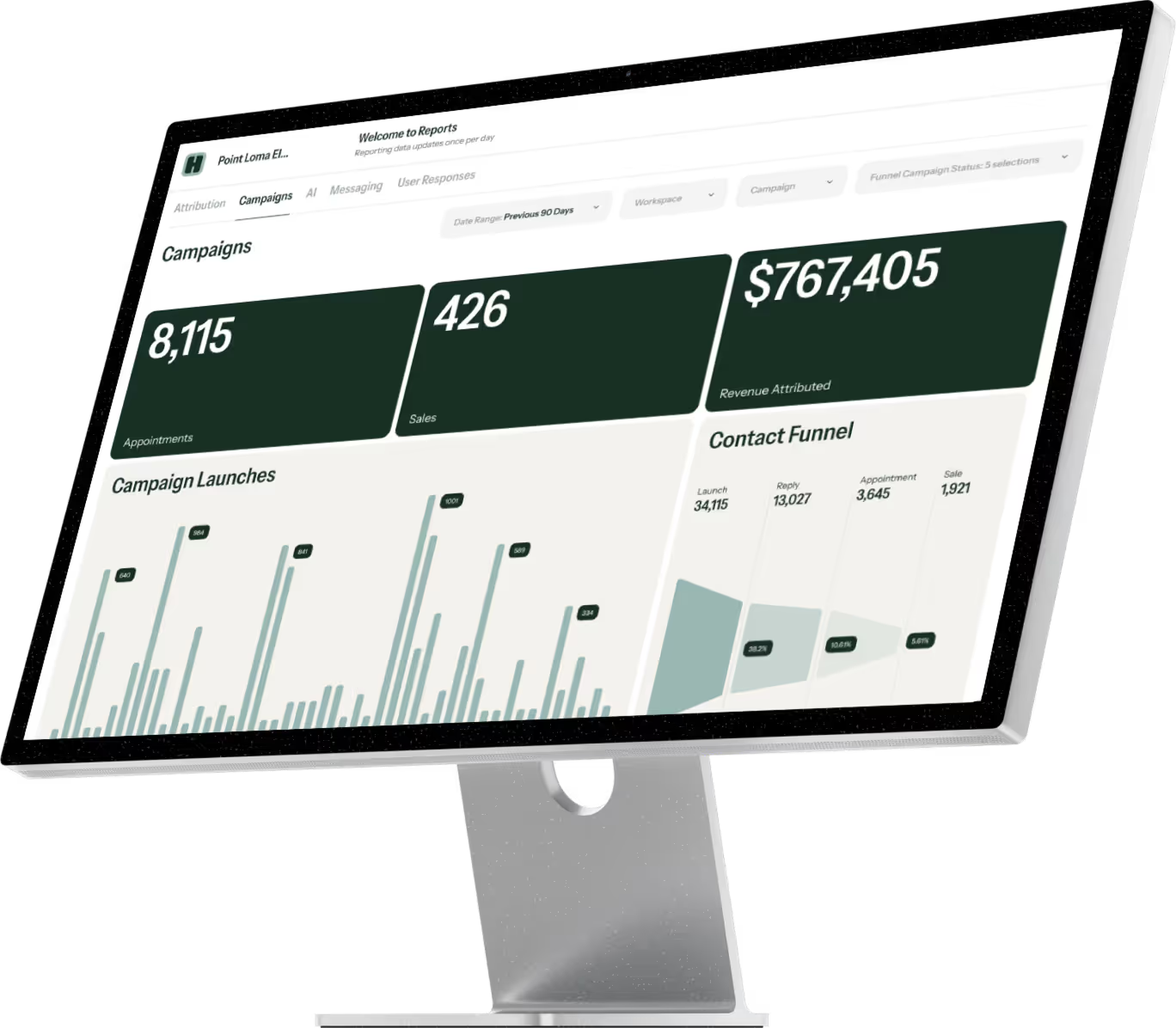
When contacts respond, Hatch’s AI agent handles the reply — managing the conversation, qualifying leads, gathering key details, and handling scheduling or FAQs — until a human is truly needed.
With Hatch taking care of the chasing and the routine back-and-forth, your team can stay focused on higher-value conversations and actions that actually move deals forward.
Denise Provinzano, Sales Director of Sun Up Zero Down said, "Hatch gets the conversation going and does all the up-front work so that by the time the lead gets to one of my reps, all they have to do is schedule. It's seamless and it takes the pressure off of my call center." Read and watch the success story here.
2. Operate leaner in 2026 and beyond
Once the urgency fades, Hatch keeps your operations sharp. With our automation and AI CSRs, you can...
- Conduct outreach and follow-up at scale
- Communicate across SMS, email, and voice
- Keep your pipeline warm even during slower seasons
....without ballooning your overhead. Hatch isn’t just a stopgap — it’s a long-term efficiency layer for your business.
Don’t wait until Q4 2025
If you're in solar or solar-plus-roofing, the time to act is now. You need systems in place today to maximize the tax credit wave — and a scalable, cost-efficient plan for the quieter period that may follow.
Hatch helps you do both. We help solar companies convert more leads, close faster, and operate lean — whether you're at full sprint or tightening the belt.
If you'd like to learn more, you can book a demo with us here.