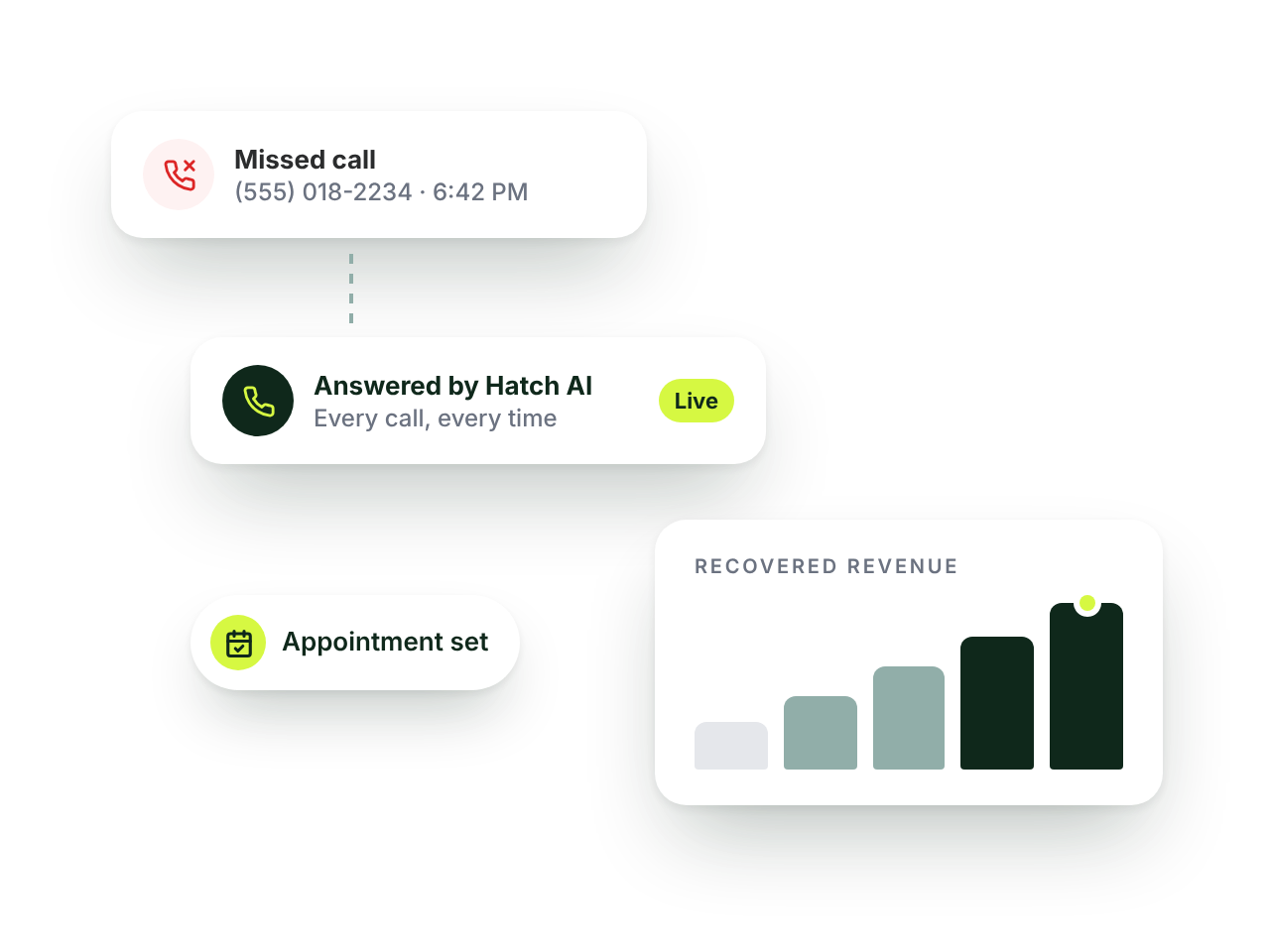

A pipe bursts at 2 AM. The homeowner watches water spread across the basement floor, grabs their phone, and searches "water damage restoration near me." They call the first company that looks credible. The phone rings four times and goes to voicemail. They hang up and call the next result.
That single missed call could represent a $3,000 to $15,000 job. In restoration marketing, the first company to answer wins. Homeowners dealing with active flooding, fire damage, or sewage backup are not comparison shopping. They need help immediately, and they will hire whoever picks up the phone.
This creates a unique challenge for restoration companies. You can invest heavily in lead generation through Google Local Services Ads, paid search, and referral networks. But if calls go unanswered during emergencies, that marketing spend produces voicemails instead of booked jobs.
Restoration companies that consistently win emergency work share a common trait: they have systems that ensure every call gets answered, qualified, and routed correctly, regardless of when it comes in. This article explains why speed to lead matters more in restoration than almost any other home service, what causes companies to miss high-value emergency opportunities, and how to build an operation that captures more of the work your marketing generates.
Key takeaways
- First response wins the job: Homeowners facing water damage, fire, or mold contact the first credible company that answers. Second place rarely gets a callback, making 24/7 availability essential to emergency marketing ROI.
- After-hours calls carry the highest intent: Industry data suggests that nearly 30% of home service calls arrive outside standard business hours, and these callers often face active emergencies. Missing this window means losing the most valuable segment of your leads.
- Lead costs only matter if you convert: Water damage leads cost $50 to $931 depending on the channel. But a $50 lead that goes to voicemail costs more per booked job than a $300 exclusive call that gets answered and scheduled immediately.
- Emergency triage prevents burnout and missed opportunities: Using a three-tier system to classify calls by urgency ensures true emergencies get immediate dispatch while routine inquiries book appropriate callbacks, protecting both conversion rates and on-call staff.
- AI call handling closes the coverage gap: Independent restoration companies can now match franchise-level 24/7 response without hiring overnight dispatchers, eliminating one of the primary advantages larger competitors have held.
What makes restoration marketing different
Restoration marketing refers to everything a water, fire, or mold remediation company does to get property owners with real losses to call first, then convert those calls into signed jobs. Unlike routine home services such as HVAC maintenance or bathroom remodeling, restoration operates under emergency conditions where response speed determines who wins the work.
That affects every marketing decision. A roofing company can follow up with a lead tomorrow. A restoration company cannot. When a homeowner discovers standing water in their living room, they need mitigation to begin quickly to prevent further damage. Water damage requires prompt assessment and mitigation because prolonged moisture exposure can increase the risk of structural deterioration and microbial growth. The ANSI/IICRC S500 standard provides procedures for professional water damage restoration, with the appropriate response depending on contamination, affected materials, and site conditions.
This urgency shapes the competitive dynamics. The homeowner is not evaluating three bids. They are calling until someone answers, then hiring that company. Marketing that generates leads without supporting instant response produces wasted spend rather than booked jobs.
Restoration companies effectively serve three distinct customer types, each requiring different approaches:
- Emergency homeowners who search Google and Local Services Ads at 2 AM during active losses
- Insurance program referrals that come through networks as assignments
- Commercial accounts secured through property manager relationships and emergency readiness plans before losses occur
The emergency homeowner segment is where marketing and operations intersect most critically. These calls happen unpredictably, demand immediate answers, and represent some of the highest-value jobs in home services, with average water damage claims reaching $15,400 according to Insurance Information Institute data from 2019 to 2023.
Why restoration companies miss emergency jobs
Calls arrive when no one is available to answer
Water damage happens on weekends, during storms, and in the middle of the night. Frozen pipes burst at 3 AM. Flash floods hit on Saturday afternoons. Appliances fail during holiday dinners when the office is closed.
Industry data suggests that nearly 30% of home service calls arrive outside standard business hours. For restoration, these after-hours calls often represent the highest-intent customers facing active emergencies. Yet this window typically has the lowest answer rates because companies rely on voicemail or owner cell phones that may not be answered.
The mismatch between when emergencies happen and when staff are available creates systematic revenue loss. Every unanswered call during an active loss is a job that goes to a competitor who picked up.
Shared leads create a race most companies lose
Lead aggregators and marketplaces such as Thumbtack, Angi, and similar platforms often send the same emergency inquiry to three to five contractors simultaneously. The first company to respond wins. Everyone else paid for a lead they never had a realistic chance of converting.
This dynamic turns lead purchase into an expensive race. If your intake process takes 15 minutes to respond while a competitor responds in 2 minutes, your conversion rate on shared leads will be significantly lower, regardless of your quality or pricing.
The economic math becomes unfavorable quickly. A $50 shared lead with a 10% close rate costs $500 per booked job. A $300 exclusive call with a 60% close rate costs $500 per booked job. The difference is that exclusive calls let you control the outcome through operational excellence rather than racing against competitors.
Manual triage creates bottlenecks and burnout
Many restoration owners handle after-hours calls themselves. The phone rings, they wake up, and they decide whether the situation requires immediate dispatch or can wait until morning.
This approach creates two problems. First, decision fatigue sets in. After the tenth 2 AM call, the owner may let calls go to voicemail or make inconsistent decisions about what constitutes a true emergency. Second, unnecessary wake-ups for routine inquiries lead to burnout without improving emergency capture.
Without clear triage criteria applied consistently, companies either over-respond to non-urgent calls or miss genuine emergencies. Both outcomes cost money and erode operational sustainability.
Marketing runs 24/7 but phones do not
Google Local Services Ads, paid search campaigns, and your Google Business Profile run around the clock. Emergencies happen at 2 AM, on holidays, and during weekends. If your marketing generates leads during hours when your phones go to voicemail, you are paying for visibility without capturing the resulting opportunities.
Marketing agencies often price restoration campaigns assuming full-day ad schedules. But they rarely address what happens when ads produce calls that no one answers. The intake system determines whether marketing spend converts to jobs or produces unmonitored voicemails.
Response time affects future lead flow
Fast response times help maintain visibility in search results. Missed calls and slow response times can hurt your online presence, reducing future lead flow. This creates a downward spiral where poor call handling leads to fewer leads, which makes it harder to justify investing in coverage improvements.
Some lead vendors also factor responsiveness into their algorithms or policies. 33 Mile Radius, for example, requires partners to respond to emergency calls in 60 minutes or less and bills companies even if calls ring four times unanswered.
How missed emergency calls affect restoration businesses
Lost revenue on high-value jobs
Each missed emergency call represents potential revenue of $3,000 to $15,000 or more, depending on the scope of damage. Industry estimates suggest a missed home services call costs $300 to $1,200 in lost revenue. For restoration, where average job values run higher than most trades, the per-call impact sits at the upper end of this range.
Missing one emergency call per week adds up to 52 missed opportunities annually. The potential revenue impact depends on average job value, the percentage of missed callers who would have booked, and whether those opportunities can be recovered through follow-up.
Wasted marketing spend
Water damage restoration keywords carry some of the highest costs per click in home services, with costs per click often ranging from $50 to over $120 for competitive terms. Local Services Ads for water damage typically cost $50 to $150 per lead. Google Ads can run $228 to $931 per lead.
When these expensive leads go to voicemail, the marketing spend produces nothing. A company paying $10,000 per month for lead generation but missing 20% of calls due to poor coverage is effectively spending $2,000 monthly on leads that never convert.
The cost of missed calls often exceeds the cost of solving the coverage problem. AI call handling or improved answering systems typically cost a fraction of what companies lose to unanswered calls.
Competitive disadvantage against franchises
National restoration franchises like SERVPRO and ServiceMaster maintain 24/7 dispatch infrastructure as standard. This coverage gives them a structural advantage in capturing emergency work during off hours when independent operators rely on voicemail.
For years, matching franchise-level coverage required hiring overnight staff at $40,000 or more annually, an investment that made sense only for larger operations. This created an uneven playing field where independents lost emergency jobs not because of service quality but because of operational capacity.
Damaged online visibility
Poor call handling can compound over time through reduced search visibility. If your responsiveness drops because of missed calls, your online presence may decline, sending fewer leads your way. You end up paying more per lead while getting fewer opportunities.
This feedback loop makes early investment in call coverage especially valuable. Maintaining strong responsiveness from the start prevents the downward spiral of declining visibility and rising costs.
How to win more emergency jobs: 7 practical strategies
1. Establish 24/7 call coverage as a baseline
Emergency restoration requires round-the-clock availability. Homeowners cannot schedule their emergencies for business hours, and competitors who answer at 2 AM will capture the jobs you miss.
Coverage options range from owner on-call rotations to professional answering services to AI-powered call handling. The right choice depends on call volume, budget, and operational complexity. But some form of 24/7 coverage is non-negotiable for companies serious about emergency work.
Start by tracking your current after-hours call volume and answer rates. If you discover that 25% or more of your calls arrive outside business hours and a significant portion go unanswered, closing that gap should be your top priority.
Measure success by: After-hours answer rate, response time from call to live conversation, and conversion rate on after-hours leads versus business-hours leads.
2. Implement a three-tier emergency triage system
Borrowing from medical emergency protocols, classify incoming calls into three tiers:
- Tier 1: Dispatch immediately. Active water damage, sewage backup, no heat with vulnerable occupants, fire damage requiring board-up. These situations require waking the on-call technician and dispatching within the hour.
- Tier 2: Urgent but stable. Single fixture out of service, slow leak contained to one area, non-emergency situations that need attention soon but can wait for morning. Book a priority callback or same-day appointment.
- Tier 3: Routine. Quote requests, general inquiries, non-emergency service calls. Schedule during normal booking windows without disrupting on-call staff.
Define specific criteria for each tier and ensure whoever handles calls applies them consistently. This protects on-call technicians from unnecessary 2 AM wake-ups while ensuring genuine emergencies get immediate response.
Measure success by: Percentage of Tier 1 calls dispatched within target window, reduction in unnecessary after-hours dispatches, and on-call staff satisfaction.
3. Prioritize exclusive leads over shared marketplace leads
Shared leads from marketplaces create a race where the fastest responder wins regardless of quality. Exclusive leads, whether from Local Services Ads, your own organic presence, or exclusive lead vendors, let you control the outcome through excellent intake rather than pure speed.
Local Services Ads typically cost $50 to $150 per lead for water damage, significantly less than Google Ads at $228 to $931 per lead. Exclusive live calls from dedicated vendors run around $300 for water, fire, and storm work.
The higher per-lead cost of exclusive calls often produces lower cost per booked job because you are not competing with four other contractors for the same homeowner. Focus your budget on lead sources where your operational excellence determines conversion.
Measure success by: Cost per booked job by lead source, not just cost per lead.
4. Optimize your Google Business Profile and Local Services Ads
Emergency homeowners searching "water damage restoration near me" see the local search results and Local Services Ads first. Appearing prominently in these placements captures high-intent traffic at the moment of need.
For Local Services Ads, focus on:
- Maintaining fast response by answering every call
- Keeping your profile complete with accurate service categories and areas
- Responding to leads quickly through the LSA dashboard or connected systems
For your Google Business Profile, ensure your hours accurately reflect 24/7 availability and keep photos and service descriptions current.
Measure success by: Position for primary service keywords, LSA lead volume and cost, and customer feedback.
5. Capture complete job information on the first call
Emergency calls need to accomplish more than scheduling. The person answering should capture enough information to dispatch effectively:
- Property address and access instructions
- Type of damage and affected areas
- Whether the water source is stopped
- Insurance information if available
- Contact name and best callback number
- Any safety concerns such as electrical hazards
Standardizing this intake process ensures dispatchers have what they need without callback delays. It also prevents the frustration of arriving at a job without critical information.
Create a simple intake checklist and train anyone who answers calls to complete it before ending the conversation.
Measure success by: Percentage of dispatches with complete information, callback rate to gather missing details, and technician feedback on job preparedness.
6. Build referral relationships with adjacent services
Plumbers, property managers, and insurance agents encounter water damage regularly. Building referral relationships with these partners creates a lead source that bypasses paid advertising competition.
Plumbers often discover water damage during service calls but do not perform restoration. A reliable referral agreement ensures they think of you first. Property managers need emergency response partners they can trust for tenant-occupied properties. Insurance agents appreciate having restoration contacts to recommend to policyholders.
These relationships take time to build but produce exclusive, high-intent leads without per-lead costs.
Measure success by: Referral volume by partner, conversion rate on referred leads, and partner retention over time.
7. Follow up on unconverted estimates systematically
Not every initial call converts immediately. Some homeowners need time to process insurance claims or evaluate their options. Without systematic estimate follow-up, these opportunities slip away.
Create a follow-up sequence for estimates that did not close:
- Day 1: Send a summary of the estimate with next steps
- Day 3: Check in on any questions or concerns
- Day 7: Offer to address any remaining hesitations
- Day 14: Final follow-up with availability window
Automate these touchpoints where possible, but ensure someone reviews responses and escalates interested prospects to a live conversation.
Measure success by: Estimate-to-job conversion rate, average time from estimate to booking, and revenue recovered from follow-up sequences.
How to maintain consistent emergency capture
Winning emergency jobs requires sustained operational discipline, not just one-time improvements. These practices help restoration companies maintain their competitive edge.
Document and train on standard intake procedures
Write down your triage criteria, intake checklist, and escalation rules. New team members should be able to handle calls correctly on day one, and existing staff should apply the same standards consistently.
Review these procedures quarterly and update them based on what you learn from missed opportunities or dispatch problems.
Monitor response times weekly
Track how long it takes from call arrival to live conversation, and from initial contact to dispatch for Tier 1 emergencies. If response times drift upward, investigate the cause before it affects conversion rates.
Set specific targets, such as answering 95% of calls within 20 seconds and dispatching Tier 1 emergencies within 60 minutes, then hold the team accountable to them.
Review missed call reports regularly
Every missed call is data. Review your missed call reports weekly to identify patterns. Are most missed calls happening during shift changes? During specific after-hours windows? When call volume spikes after storms?
Use these patterns to adjust coverage schedules, staffing levels, or backup systems.
Plan for surge capacity
Regional weather events can triple or quadruple call volume overnight. Companies that capture surge demand grow faster than those who let overflow calls go to competitors.
Identify backup coverage options before you need them. This might include on-call agreements with partner companies, overflow routing to answering services, or AI systems that handle unlimited concurrent calls without degradation.
Maintain LSA and Google Business Profile hygiene
Your online presence requires ongoing attention. Keep service areas and hours accurate. Update photos seasonally. Monitor your Local Services Ad performance and address any issues immediately.
Neglecting these basics erodes visibility over time, making lead generation progressively more expensive.
Emergency response maintenance checklist
Use this checklist monthly to ensure your emergency capture systems remain effective:
- [ ] After-hours answer rate above 95%
- [ ] Average response time under 60 seconds
- [ ] Tier 1 dispatch time under 60 minutes
- [ ] Intake checklist used on 100% of calls
- [ ] Fast response maintained for Local Services Ads
- [ ] Google Business Profile information current
- [ ] Follow-up sequences active for unconverted estimates
- [ ] On-call rotation scheduled for next 30 days
- [ ] Surge capacity plan documented and contacts verified
{{in-line-cta}}
How Hatch helps restoration companies capture more emergency jobs
Restoration companies need every call answered, qualified correctly, and routed based on urgency, whether it comes in at noon or 2 AM. Hatch is an AI communications platform built for service businesses that addresses exactly this challenge.
24/7 call coverage without overnight staffing costs
Hatch's Voice AI answers incoming calls around the clock, applying your triage criteria consistently on call 400 the same as call 1. When a homeowner calls about a burst pipe at 3 AM, Voice AI captures the essential job details, classifies the emergency tier, and routes true emergencies to your on-call technician immediately.
This eliminates the two traditional options: burning out the owner with every after-hours call or paying $40,000 or more annually for dedicated overnight staff. Independent restoration companies can now match franchise-level emergency coverage at a fraction of the cost.
Consistent qualification and intake
Voice AI uses your stored business information to apply the same intake checklist and qualification questions on every call. The system captures property address, damage type, affected areas, insurance status, and safety concerns before routing or scheduling.
Your dispatchers receive complete job information without callback delays. Your on-call technicians wake up only for genuine Tier 1 emergencies, with the details they need already captured.
Multi-channel follow-up for unconverted opportunities
Not every call converts immediately. Hatch's Messaging AI continues the conversation via text and email, following up on estimates and nurturing leads who need time to work with insurance or evaluate options. Journey Builder automates these touchpoints so opportunities do not slip through the cracks.
When a prospect responds, the system can book directly into your schedule or alert your team for a live conversation, depending on how you configure the workflow.
Visibility into what is working
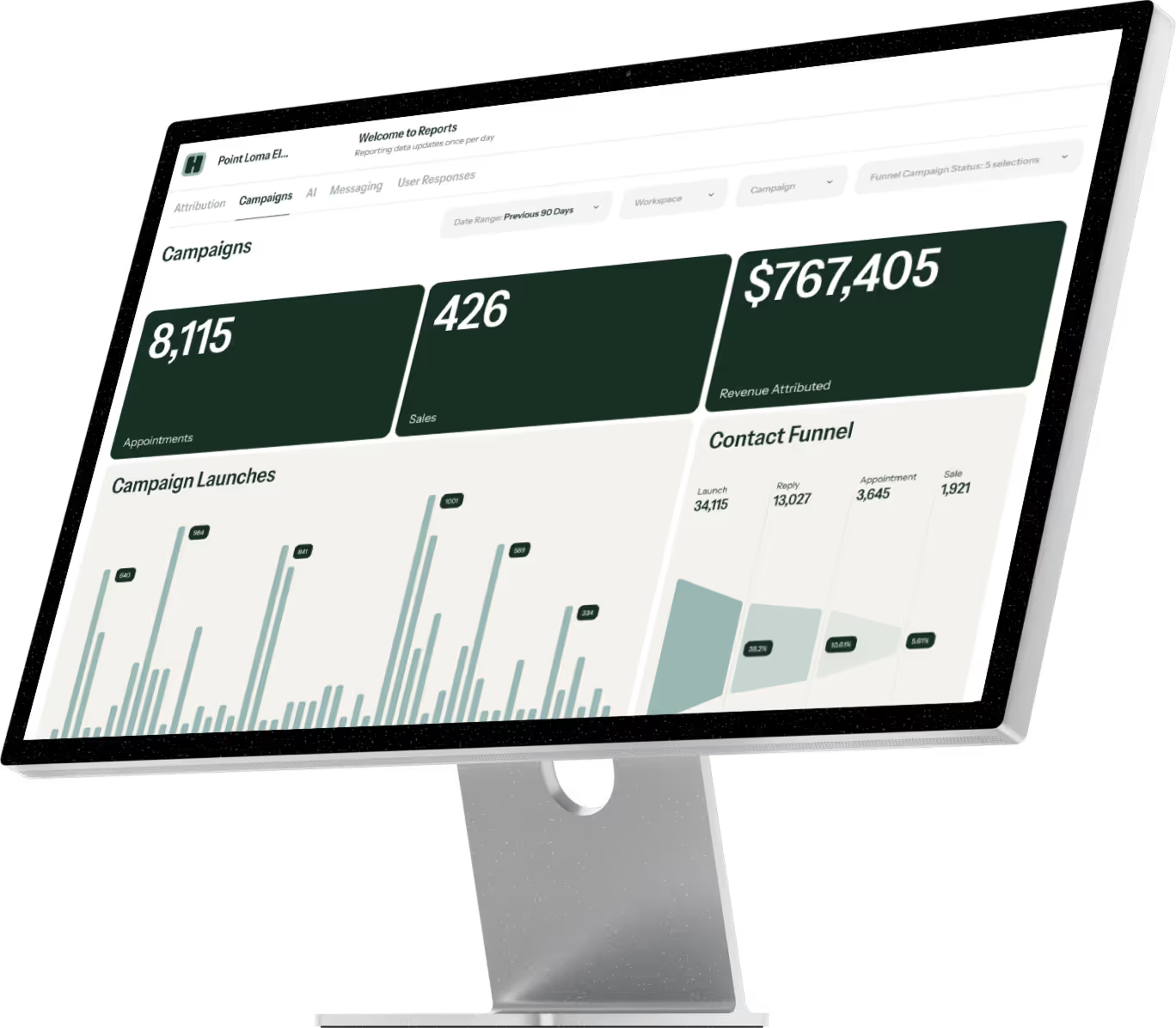
Command Center and ROI Reporting show which lead sources produce booked jobs, how quickly calls get answered, and where opportunities are lost in the funnel. This visibility helps you allocate marketing spend toward channels that actually convert and identify operational bottlenecks before they cost significant revenue.
Hatch connects with systems restoration companies already use, including ServiceTitan, keeping customer information synchronized and reducing manual data entry.
For restoration companies where every missed call represents thousands in potential revenue, Hatch provides the infrastructure to ensure your marketing investment actually converts to booked jobs.
Why restoration companies choose Hatch
The difference between a restoration company that grows steadily and one that struggles often comes down to call handling infrastructure. Franchise operations have invested millions in 24/7 dispatch centers, giving them a structural advantage in capturing emergency work. Independent restoration companies historically faced a difficult choice: invest $40,000 or more annually in overnight staff, or accept that after-hours calls would go to competitors.
Hatch changes this dynamic. With AI-powered call handling that applies consistent triage, captures complete job details, and routes true emergencies immediately, independent operators can now compete on equal footing with national brands. The system handles unlimited concurrent calls during storm surges, never gets decision fatigue at 3 AM, and costs a fraction of traditional staffing solutions.
Companies using Hatch for emergency call handling report higher conversion rates on after-hours leads, reduced on-call staff burnout, and better visibility into which marketing channels actually produce booked jobs. The platform integrates with existing dispatch systems and business software, so implementation does not require replacing your current technology stack.
For restoration businesses where every unanswered call potentially represents $3,000 to $15,000 in lost revenue, Hatch provides the operational foundation that turns marketing investment into consistent growth.
Sources
Information on restoration marketing, emergency response times, water damage restoration costs, insurance claims, after-hours calls, lead generation costs, Google Local Services Ads, emergency dispatch, and customer communication is based on publicly available research, industry reports, and service provider information from the Insurance Information Institute, Institute of Inspection Cleaning and Restoration Certification (IICRC), 33 Mile Radius, Google, and Hatch, reviewed November 2026: iii.org; iicrc.org; 33mileradius.com; google.com; usehatchapp.com. Insurance claim figures are attributed to Insurance Information Institute data from 2019 to 2023. Water damage restoration procedures reference the ANSI/IICRC S500 standard. Other industry benchmarks, including lead costs, after-hours call volumes, and emergency response practices, are discussed in the article but are not consistently attributed to identifiable primary sources.
The information above is provided for educational and informational purposes only. Individual results and performance may vary. It is not intended to be a substitute for professional advice and may not be suitable for your circumstances. Restoration job values, insurance claim amounts, lead generation costs, response times, and potential revenue estimates may vary by location, damage severity, insurance coverage, market conditions, and operating practices. Information about third-party providers is based on their publicly available websites as of November 2026 and may change. Unless stated otherwise, references to third-party links, services, or products do not constitute endorsement by Hatch.