A homeowner's furnace fails at 11pm in January. They call the first HVAC company that comes up. No answer. They call the second. Voicemail. Whoever answers next is likely who they’re going with. If that’s not you, by the time your office opens at 8am, they've already booked with the competitor who picked up.
After-hours coverage is a real operational challenge for home service businesses. Scorpion’s 2026 State of Home Services Marketing Report found that 56% of homeowners want 24/7 scheduling or a way to communicate after hours, while 66% of home services businesses say providing after-hours customer service is their top challenge. For teams that can’t staff every night and weekend, always-on coverage helps keep new inquiries from sitting unanswered until the next business day.
AI CSR platforms exist to solve this problem, but not all of them solve it the same way. Some answer calls. Some send texts. Some book appointments. The best ones help service businesses manage customer conversations from the first inquiry through the booked job and beyond.
This guide evaluates the leading platforms based on how well they serve the specific needs of HVAC, plumbing, electrical, roofing, and other home service companies.
Key takeaways
- The best AI CSR platforms for home services go beyond answering calls. They qualify leads, book appointments, confirm jobs, follow up on estimates, and reconnect with past customers.
- Purpose-built platforms with native field service management integrations (ServiceTitan, Jobber, Housecall Pro) reduce manual data entry and keep customer records current.
- Voice AI matters most for emergency trades like HVAC and plumbing, where the after-hours call is usually urgent and whoever picks up first gets the lead. Project-based trades like roofing and remodeling need estimate follow-up and lead nurture on top of call coverage.
- The right platform depends on your company size, trade mix, and how much of the customer journey you want to automate.
What makes an AI CSR platform effective for home services
Generic customer service AI built for ecommerce or SaaS companies often struggles with home services. The customer journey is different. A homeowner with a leaking pipe needs emergency dispatch, not a scripted web widget asking them to browse an FAQ.
Effective AI CSR platforms for home services share several characteristics:
- Trade-specific qualification: The AI needs to ask the right questions for your trade: service area verification, equipment type, urgency level, homeowner versus tenant status.
- Appointment booking with your rules: The platform should know your service windows, capacity limits, and which technicians handle which job types.
- After-hours coverage that converts: Answering the call is just the beginning. The AI should qualify the opportunity and get it on the calendar before the customer calls someone else.
- Integration with your existing systems: Customer data should flow into your CRM or field service management platform without manual entry.
- Follow-through beyond the first response: The best platforms help with estimate follow-up, appointment confirmations, and reconnecting with customers, not just initial lead response.
The 10 platforms at a glance
Each row reflects what the vendor's own site says. "Lifecycle coverage" means what the platform does after the first response: confirmations, estimate follow-up, nurture, recontact, or post-sale support.
The 10 best AI CSR platforms for home service companies
1. Hatch
Hatch helps home service companies respond to new leads, book appointments, follow up with customers, and drive repeat business across voice, text, email, and web.
Key features
Hatch is an AI communications platform built specifically for service businesses. Its AI CSRs handle multiple stages of the customer conversation:
- Voice AI answers and qualifies calls 24/7, booking appointments directly into your calendar based on your scheduling rules
- Messaging AI responds to leads via text and email, maintaining conversations until they're ready to book
- Journey Builder automates estimate follow-up, appointment confirmations, and customer reactivation campaigns
The platform integrates natively with ServiceTitan, LeadPerfection, AccuLynx, and improveit 360 through Data Bridge, keeping customer records synchronized without manual entry.
Where it fits
Hatch is specifically designed for service businesses and covers the full customer journey rather than stopping after the initial response. When a lead calls after hours, Voice AI qualifies them and books the appointment. If they don't book immediately, Messaging AI follows up. After a technician provides an estimate, Journey Builder sends follow-up sequences. When equipment ages out, the platform can reconnect with customers about replacement options.
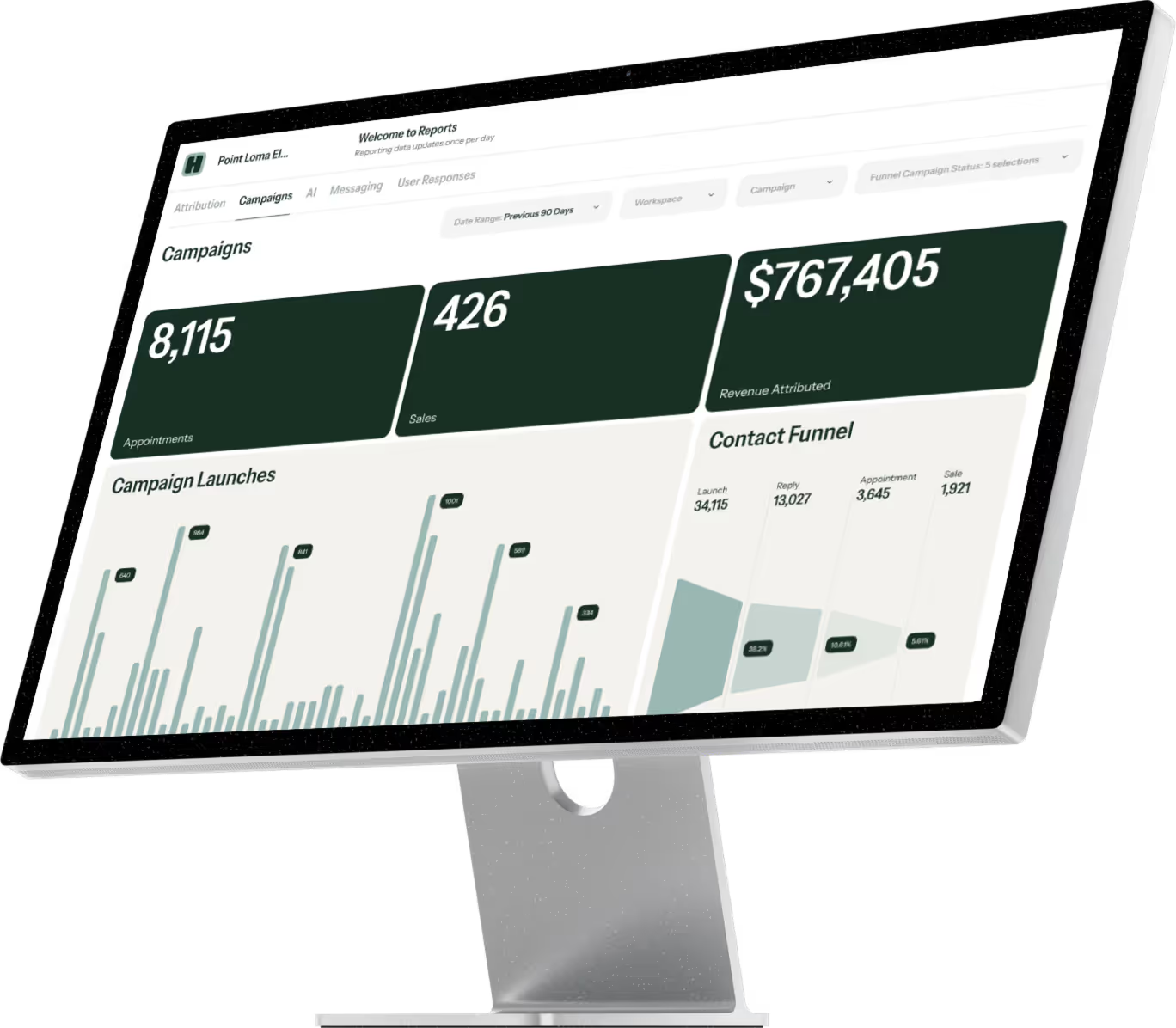
Command Center gives CSR managers visibility into every AI conversation, with the ability to take over when human judgment is needed. It builds one source of truth for all customer info and lets your AI tools and customer service reps all work from the same queue.
Documented results
- High Ground Service Pros books 81% of bookable leads with Hatch AI and estimates $300,000 in annual savings
- Peaden nearly tripled conversion on after-hours and overflow calls
- Bone Dry Roofing closed $7 million in rehash revenue using estimate follow-up campaigns
2. Podium
Podium brings customer reviews, payment collection, and AI-powered appointment setting into one platform. For multi-location home service businesses, it offers a way to manage online reputation, collect payments, and convert incoming inquiries into appointments.
Key features
- AI Employee handles lead conversations across phone calls, text, web chat, and email.
- Review management automates review requests after completed jobs.
- Payment tools let businesses collect payments within the same customer communication platform.
Where it fits
Podium works well for businesses that want a single platform for customer messaging, reputation management, and payments. The AI focuses primarily on initial lead engagement and appointment setting rather than post-sale follow-up.
What to consider
Podium serves a broader local business market (automotive, aesthetics, retail) alongside home services. Companies wanting deep specialization in home services workflows may find the platform more generalist than alternatives built specifically for trades.
3. ServiceTitan
ServiceTitan combines field service management with AI-powered call answering and appointment booking. Built for established home service businesses, it brings AI capabilities into existing scheduling, dispatch, and customer management workflows.
Key features
- Titan Intelligence adds AI capabilities within ServiceTitan’s field service management platform.
- AI Virtual Agent, part of Contact Center Pro, answers calls and books appointments 24/7.
- Workflow and marketing tools work alongside ServiceTitan’s existing dispatch, scheduling, and customer management features.
Where it fits
For companies already running ServiceTitan, the native AI features eliminate integration complexity. The AI capabilities work within the existing dispatch and scheduling workflows rather than as a separate system.
What to consider
ServiceTitan is built for established operations with multiple technicians and dedicated office staff, so it is a larger implementation than a single-crew shop usually needs. Companies using ServiceTitan who want AI communication across text, email, and web as well as voice can add Hatch, which is a certified ServiceTitan app designed specifically for the needs of service businesses.
4. Zendesk AI
Zendesk AI focuses on customer support operations, with automated ticket routing, AI-suggested replies, and self-service tools. For larger home service companies managing high volumes of customer requests, it provides a centralized system for organizing inquiries and coordinating support teams across locations.
Key features
- Automated ticket routing directs customer requests to the appropriate queue or agent.
- AI-suggested replies help customer service teams respond to inquiries.
- Self-service automation handles common customer questions without requiring an agent for every request.
Where it fits
Zendesk works best for larger operations with dedicated customer service teams who need tools for managing support queues, tracking resolution metrics, and maintaining service consistency across locations. The platform is less focused on lead conversion and more on ongoing customer support.
What to consider
Zendesk is built for customer service rather than sales conversion. Home service companies may need to pair it with other tools for lead qualification and appointment booking.
5. Intercom Fin
Intercom Fin is an AI customer support tool for businesses that handle inquiries primarily through digital channels. It answers customer questions, manages ongoing conversations, and transfers requests to human agents when needed. Its focus is customer support rather than home service-specific workflows such as appointment booking and scheduling.
Key features
- Multi-turn AI conversations let Fin handle customer questions across ongoing exchanges.
- Human handoff routes conversations to an agent when the AI cannot confidently resolve the request.
- Outcome-based pricing charges per outcome Fin delivers, such as a resolution or a handoff, rather than per seat or per minute.
Where it fits
Intercom works well for companies where most customer communication happens through chat or messaging rather than phone calls. The outcome-based model ties cost to the conversations Fin actually handles.
What to consider
Intercom's strength is text-based communication. Home service companies in emergency trades (HVAC, plumbing) where customers expect to call for urgent issues may need to pair Intercom with a voice-focused solution.
6. Housecall Pro
Housecall Pro combines scheduling, invoicing, and customer management with AI call answering through its CSR AI feature. Designed for small to mid-size home service businesses, it brings call handling and appointment booking into the same system used to manage daily service operations.
Key features
- CSR AI answers calls and books jobs 24/7.
- Scheduling and invoicing are built into the same field service management platform.
- Review and marketing tools support automated review requests and basic customer outreach.
Where it fits
For smaller operations that want a single system for running their business, Housecall Pro provides FSM basics plus AI call handling without requiring multiple integrations.
What to consider
Housecall Pro's communication features are built around its own field service workflows. Growing companies that need more sophisticated AI capabilities across estimate follow-up, lead nurturing, or customer reactivation may outgrow the platform's communication features.
7. HubSpot Service Hub
HubSpot Service Hub adds AI-powered customer support capabilities to HubSpot CRM. For home service companies already using HubSpot, it connects support conversations with existing customer records, including interaction history and deal information.
Key features
- Breeze Customer Agent handles customer conversations using information stored in HubSpot CRM.
- CRM context gives the AI access to customer history, previous interactions, and deal information.
- Knowledge Base Agent turns resolved support conversations into draft help content.
Where it fits
HubSpot Service Hub makes the most sense for companies already invested in the HubSpot ecosystem. The AI has full access to customer history, past interactions, and deal information, which helps it provide contextual responses.
What to consider
The full value of HubSpot Service Hub requires adoption of HubSpot CRM. Companies using other CRMs may not get the same benefit from the integrated customer context.
8. Freshdesk (Freddy AI)
Freshdesk is a customer support platform with AI tools for handling inquiries, managing tickets, and assisting support agents. Its Freddy AI features automate routine customer questions and suggest responses, making it relevant for home service businesses that need general customer support capabilities rather than specialized field service workflows.
Key features
- Freddy AI Agent handles customer conversations across email and chat.
- Freddy AI Copilot gives agents reply suggestions and conversation summaries.
- Helpdesk tools provide ticket management and customer support workflows within the same platform.
Where it fits
Freshdesk works well for companies that need to handle customer support inquiries efficiently but don't require deep home services specialization.
What to consider
Freshdesk is a general-purpose helpdesk rather than a home services specialist. Companies may need to customize workflows significantly to match home services use cases like emergency triage and appointment booking.
9. Jobber
Jobber brings quoting, scheduling, customer management, and AI call answering into one field service platform. For small home service businesses, its quoting tools allow customers to select optional services and add-ons before approving an estimate, while AI Receptionist handles incoming calls and booking requests.
Key features
- AI Receptionist answers calls and texts 24/7, books jobs, and takes messages.
- Quoting tools let businesses build estimates with optional add-ons and service packages.
- Field service management combines scheduling, customer management, and job administration in one system.
Where it fits
Jobber is suited to home service businesses that regularly prepare quotes before scheduling jobs. Its quoting tools let customers review estimates, select optional services or add-ons, and approve the work online.
What to consider
Like Housecall Pro, Jobber's communication tools are built around its own field service workflows. Companies needing AI capabilities beyond basic call answering, such as estimate follow-up campaigns or customer reactivation, may need to add complementary platforms.
10. Helpshift
Helpshift focuses on automating customer support for businesses handling large volumes of repetitive inquiries, particularly in gaming and mobile apps. Its AI tools identify customer issues, provide automated responses, and route unresolved requests to support agents.
Key features
- AI issue resolution handles repetitive customer support requests without requiring an agent for every conversation.
- Intent detection helps identify what a customer needs and route or resolve the request accordingly.
- Self-service automation is designed for businesses handling high volumes of recurring support questions.
Where it fits
Helpshift excels at deflecting high volumes of support inquiries automatically. The platform is strongest for companies with repetitive support questions that can be resolved through self-service.
What to consider
Helpshift is built for game studios. Home service businesses may find the platform lacks industry-specific features like service area verification, emergency call triage, and field service management integration.
How to choose the right platform
The right AI CSR platform depends on how your team operates and where customer conversations are most likely to fall through.
Company size and complexity
Start with the amount of communication your team needs to manage. A smaller operation may only need reliable call coverage and appointment booking. Larger or multi-location businesses usually need broader capabilities, including standardized qualification rules, reporting, human handoffs, and visibility across teams.
Trade mix
Match the platform to how customers contact you. Emergency trades like HVAC and plumbing need strong voice capabilities and after-hours coverage. Project-based businesses like roofing and remodeling need the same call coverage plus consistent estimate follow-up, lead nurture, and support for a longer sales cycle.
Current systems
Look for a platform that connects directly with the tools your team already uses, including your CRM, scheduling software, and lead sources. Customer details, appointments, and conversations should stay up to date across your systems without your team having to enter the same information twice.
Scope of automation
Decide how much of the customer journey you want the platform to cover. Some businesses only need 24/7 call handling. Others want AI to support speed to lead, appointment booking and confirmation, estimate follow-up, lead nurture, and customer reactivation. The stronger fit is the platform that covers the stages where your team needs more capacity.
Why home service companies choose Hatch
While many platforms focus on a single part of the customer conversation, Hatch was built to handle the complete journey. Voice AI answers and qualifies after-hours calls. Messaging AI nurtures leads who aren't ready to book immediately. Journey Builder follows up on estimates and reconnects with past customers when it's time for maintenance or replacement.
Because Hatch integrates natively with platforms like ServiceTitan, LeadPerfection, and AccuLynx, customer data stays synchronized across systems without manual entry. CSR managers maintain full visibility through Command Center, with the ability to step in whenever human judgment adds value.
For home service companies looking to automate more than just call answering, Hatch provides the depth and specialization that generic customer service platforms can't match.
Frequently asked questions
How do AI CSR platforms differ from traditional answering services?
Traditional answering services use human operators who take messages and forward them to your team. AI CSR platforms use artificial intelligence to qualify leads, answer questions using your business information, and book appointments directly into your calendar, often without human involvement. The AI can handle multiple conversations simultaneously and maintain consistent quality 24/7.
Can AI CSR platforms handle emergency calls appropriately?
The better platforms include emergency triage capabilities that can identify urgent situations (no heat in winter, active water leak) and route them appropriately. Some platforms can dispatch emergency calls to on-call technicians while booking non-urgent requests for the next available appointment. When evaluating platforms, ask specifically about emergency call handling for your trade.
What changes for my CSR team when we add an AI CSR platform?
AI CSR platforms give teams more capacity and consistent coverage. The AI handles routine inquiries, after-hours calls, and initial qualification, and your CSRs take the conversations that need judgment: escalations, complex scheduling, and customers who want a person. Most platforms include handoff controls so a team member can take over any conversation when needed.
What integrations should I look for?
Prioritize platforms that integrate with your existing field service management system (ServiceTitan, Housecall Pro, Jobber), your CRM, and your lead sources (Yelp, Angi, Google Local Services Ads, Thumbtack). Native integrations reduce manual data entry and keep customer records current across systems. Learn more about Hatch integrations.
How long does implementation typically take?
Implementation timelines vary significantly by platform. Basic call answering can be live within days. More sophisticated setups with custom qualification flows, FSM integration, and multichannel campaigns may take several weeks. Ask vendors about typical implementation timelines for companies similar to yours.