
Phone calls remain the highest-converting channel for home service businesses. When a homeowner calls about a broken furnace, a leaking roof, or an emergency plumbing issue, they're often ready to book. But research consistently shows that a significant share of those calls never reach a person.
This creates a measurable gap between the demand home service businesses generate and the jobs they actually book. Understanding the scope of that gap, and what happens when calls go unanswered, helps operators make informed decisions about staffing, technology, and customer communication.
The statistics below draw from industry research, platform data, and consumer surveys published between 2022 and 2026. Each finding is tied to its original source, with context about what was measured and who was included.
Key takeaways
- Home service businesses miss a significant share of incoming calls. A study of 36,498 contractor calls found an average live-answer rate of just 48.3%, with roofing businesses answering only 28.1% of calls.
- Missed opportunities extend beyond unanswered calls. Pied Piper's 2026 research found that 42% of home service inquiries failed to receive an effective response, while 72% received no follow-up within 24 hours.
- Customers expect fast phone support. A 2025 consumer survey found that 77% expect to reach someone within three minutes, making prompt call handling important for businesses competing for appointments.
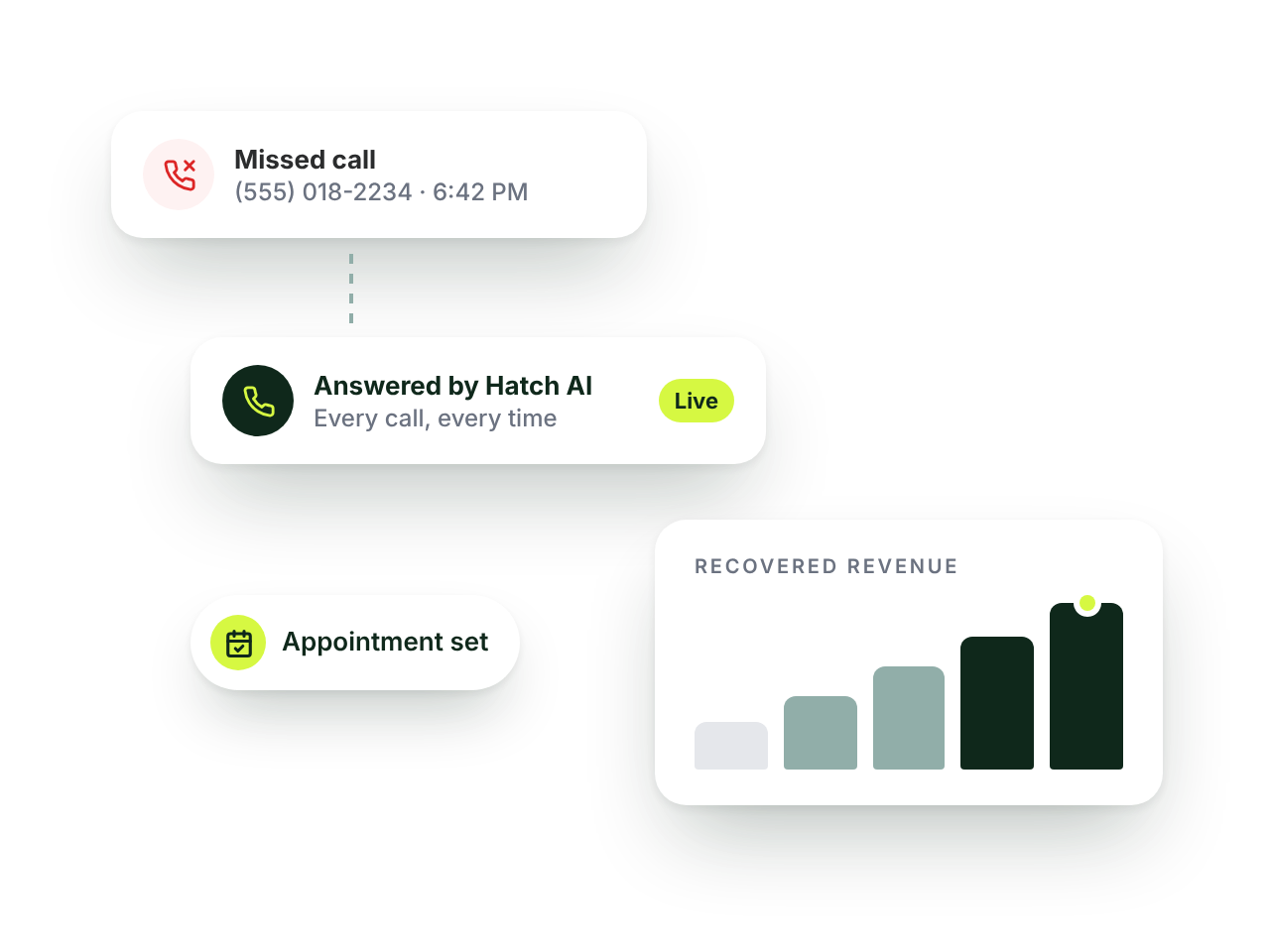
- Missed-call follow-up can recover bookings and revenue. G.L. Hunt reported 594 booked appointments and $1.8 million in influenced revenue over 90 days through a Hatch missed-call follow-up campaign.
- After-hours coverage creates opportunities to capture more leads. With 74% of consumers expecting 24/7 service, solutions such as Hatch Voice AI can help home service businesses answer overflow and after-hours calls, qualify inquiries, and schedule appointments.
Missed inquiries and follow-up
1. 48.3% average answer rate across 36,498 home service calls
Data from 99 Calls, which tracked contractor call handling across 36,498 calls, found the average answer rate was just under half. Roofers had the lowest live-answer rate at 28.1% across 3,604 tracked calls.
2. Only 28.1% of roofing calls reach a live person
A 2026 analysis of 36,498 contractor calls found that roofing businesses had a 28.1% live-answer rate across 3,604 calls. This was the lowest answer rate among the 15 trades reported, suggesting roofing contractors may face substantial challenges handling incoming inquiries.
3. HVAC businesses answer 43.2% of incoming calls
The same contractor call analysis found that HVAC businesses answered 43.2% of 465 evaluated calls. The remaining calls did not reach a live person under the study's classification rules, highlighting the importance of call coverage during periods of high service demand.
4. Plumbing businesses have a 58% live-answer rate
Among 1,794 plumbing calls evaluated, 58% reached a live person. While this exceeded the overall contractor benchmark of 48.3%, a substantial share of calls still did not receive a live answer.
5. Landscaping businesses answer only 34.8% of calls
The 2026 contractor benchmark found that landscaping companies answered 34.8% of 1,688 evaluated calls. For businesses managing crews in the field, this illustrates the potential difficulty of handling incoming inquiries while coordinating active jobs.
6. One foundation repair company booked 594 appointments through missed-call follow-up
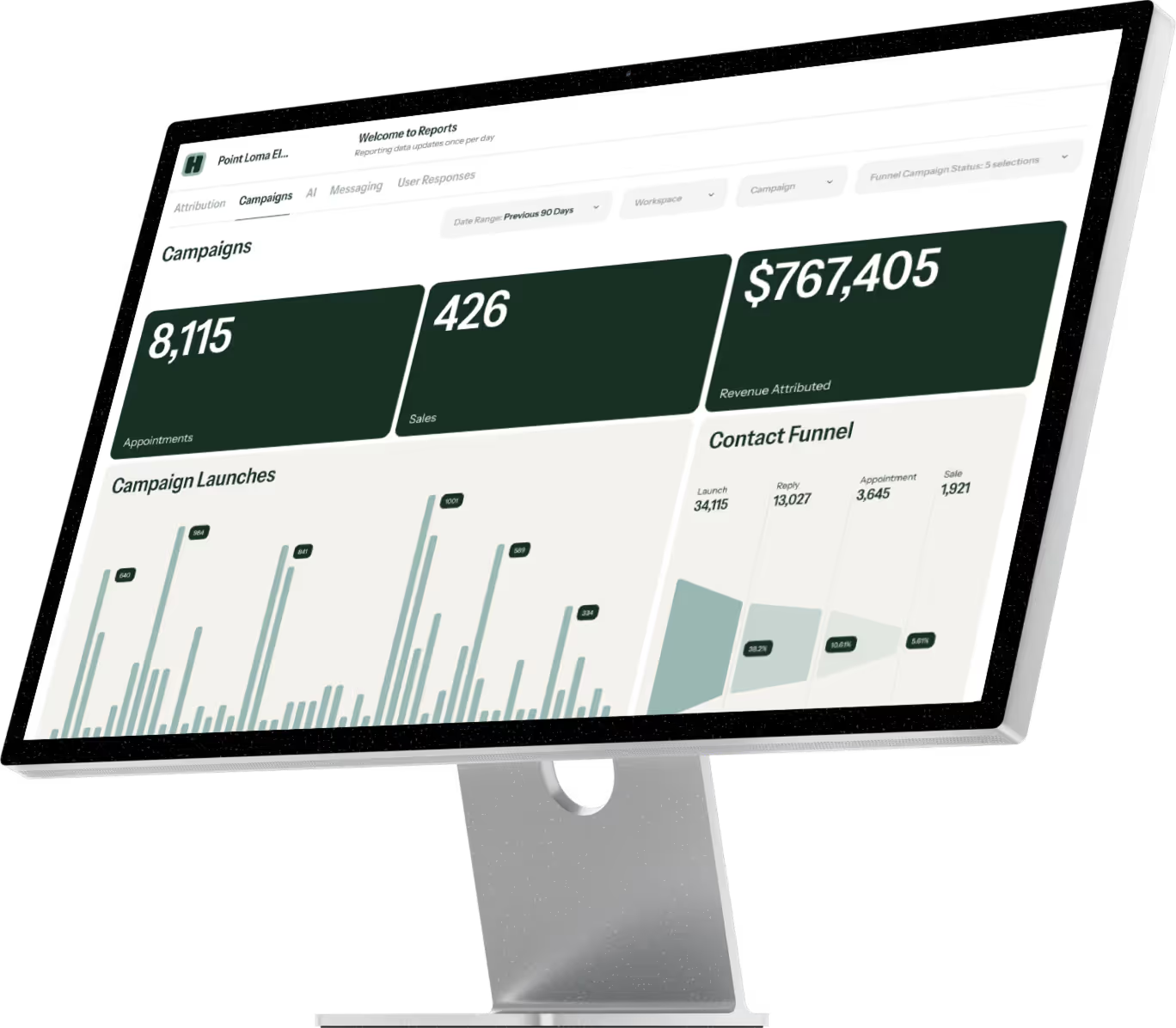
G.L. Hunt reported that its missed-call follow-up campaign generated 594 booked appointments over 90 days. The campaign recorded 5,711 launches and a 10% appointment set rate, demonstrating how follow-up can recover opportunities from previously unanswered calls.
7. Missed-call follow-up influenced $1.8 million in revenue over 90 days
The same G.L. Hunt campaign influenced 279 sales and $1.8 million in revenue during the 90-day measurement period. These customer-reported results show how missed-call recovery can contribute to revenue beyond the initial phone interaction.
8. One contractor booked 123 leads that would otherwise have gone unanswered
High Ground Service Pros reported booking 123 previously unanswered leads in approximately one month after implementing Hatch Voice AI. The company initially used AI for overflow and after-hours calls before expanding coverage, demonstrating how additional call-handling capacity can recover booking opportunities.
9. Voice AI scheduled more than 90 appointments monthly for one home services provider
Shafer Services reported that Voice AI scheduled over 90 appointments per month while handling 200–300 calls. The company used automated answering for after-hours and overflow inquiries, helping turn calls that might otherwise have reached voicemail into scheduled appointments.
10. 42% of home service customer inquiries fail to produce an effective response
Pied Piper's 2026 Lead Handling Effectiveness study found a 42% lead failure rate across major home service brands. Researchers conducted 3,211 evaluations across 31 brands, testing how businesses handled inquiries by phone, chat, and web form. The findings show that missed opportunities extend beyond unanswered calls to include inadequate responses and failed follow-up.
11. 72% of home service inquiries receive no follow-up
In the same 2026 study, Pied Piper found that 72% of evaluated customer inquiries received no follow-up during the 24-hour observation period. Researchers tracked subsequent phone calls, text messages, and emails after initial contact. This suggests that many contractors miss a second opportunity to connect with prospective customers, even after the initial inquiry.
12. Only 28% of eligible home service inquiries result in an appointment offer
Pied Piper found that customers were offered an appointment only 28% of the time in situations where scheduling was a natural next step. Some brands offered appointments on more than 70% of calls, highlighting differences in how contractors convert initial conversations into booking opportunities.
13. Some home service brands fail to answer customer questions more than 75% of the time
The 2026 Pied Piper study found substantial differences in lead handling among major home service brands. While the strongest performers failed to answer customer questions less than 20% of the time, four brands had failure rates above 75%. These figures measure whether inquiries received effective answers, rather than the percentage of telephone calls that went unanswered.
{{in-line-cta}}
Customer expectations for phone support
14. 77% of consumers expect to speak with someone within three minutes
The 2025 CX Leaders Trends & Insights Consumer Edition report found that 77% of respondents expected to reach someone within three minutes when calling a company's customer service department, up from 64% in 2024. For home service businesses, the finding illustrates why long hold times and unanswered calls can create friction early in the customer journey.
15. 13% of consumers expect phone support in under one minute
The same 2025 consumer research found that 13% of respondents expected to speak with someone in less than a minute when calling customer support. Another 33% expected contact within one to two minutes. These expectations underscore the importance of answering inbound calls promptly, particularly for businesses that rely on phone inquiries to schedule appointments.
Speed and response expectations
16. Only 20% of home service professionals reply to a new lead within an hour
Jobber's 2026 Home Service Trends Report found that just one in five home service professionals respond to a new lead within 60 minutes. The majority take longer.
17. 60% of home service professionals take until end of day to respond to leads
The same Jobber report found that 60% of professionals don't respond until the end of the day. For customers comparing multiple options, that delay may be too long.
After-hours and weekend demand
18. 14.1% of HVAC calls arrive after hours during peak summer months
ServiceTitan's State of the Trades data shows that off-hours call volume for HVAC businesses peaks at 14.1% in June, compared to 9.8% in October. Seasonal demand shifts when customers call.
19. Weekend HVAC calls increase 67% from October to August
The same ServiceTitan data shows weekend call volume increases by 67% from the fall low to the summer peak. Businesses without weekend coverage may miss a meaningful share of demand.
20. 74% of consumers now expect 24/7 customer service because of AI
Zendesk's CX Trends 2026 report, based on surveys of over 6,000 consumers across 22 countries, found that 74% now expect businesses to offer round-the-clock service. The growth of AI-powered support has raised baseline expectations.
For service businesses that can't staff phones around the clock, Voice AI can answer and qualify calls outside business hours, ensuring customers get a response when they call rather than reaching voicemail.
AI adoption among contractors
21. 74% of residential contractors see AI as key to running an efficient business
ServiceTitan's 2026 Residential State of the Trades Report found that nearly three-quarters of residential contractors view AI as important to operational efficiency. Awareness of AI's potential is high.
22. Only 12% of skilled trades contractors have actually embedded AI
Despite broad awareness, ServiceTitan's 2025 survey of 1,032 contractors found that only 12% have actually embedded AI into their operations. Two-thirds expect AI to reshape the industry within one to three years, but most haven't acted yet.
Customer trust and local business selection
23. 20% of consumers consider contacting a local business after reading positive reviews
BrightLocal's 2026 Local Consumer Review Survey found that 20% of respondents selected contacting a business as an action they might take after reading positive reviews. Another 20% selected making an appointment. For home service businesses, these findings highlight the importance of handling inquiries from customers who have already researched a provider. The survey did not specify whether those contacts would occur by phone, text, or another channel.
24. 42% of consumers are unlikely to use a business that never responds to reviews
BrightLocal's 2026 survey found that 42% of consumers were unlikely to use a business that ignored customer reviews entirely. Although the finding measures review responsiveness rather than missed calls, it provides additional evidence that customers consider communication when evaluating local service providers.
What the data suggests
The statistics point to a consistent pattern: phone leads are high-value, customer patience is limited, and a significant share of demand never reaches someone who can help.
For service businesses, the implication is straightforward. The leads you pay to generate are only valuable if someone responds. When calls go unanswered, most customers don't leave a voicemail. They call someone else.
The gap between customer expectations and actual response times creates room for businesses that can respond faster and more consistently. That doesn't necessarily require more staff. It requires coverage when customers are ready to talk, whether that's during business hours, after hours, or on weekends.
Hatch's AI communications platform is built to help service businesses respond across the customer lifecycle, from the first inquiry through booking, follow-up, and ongoing customer care. When a call comes in after hours, Voice AI can answer, qualify the opportunity, and book the appointment. When an estimate goes cold, Messaging AI can follow up. The goal is consistent coverage without requiring the team to manually handle every interaction.
The statistics in this report don't guarantee any particular outcome. But they do establish what service businesses are competing against: customers who expect fast responses, limited patience for hold times and voicemail, and competitors who may be picking up the phone when you're not.