
Home improvement companies spend heavily on lead generation. But generating a lead is only part of the job. The lead still needs a response. The opportunity still needs qualification. The appointment still needs confirmation. The estimate still needs follow-up. And the past customer may be ready to return.
The data in this report shows where follow-up breaks down, what customers expect, and how response patterns affect booking rates. For service businesses managing customer conversations across channels, these numbers reveal what separates businesses that convert demand from those that lose it.
Key takeaways
- Speed matters in winning new business: 78% of customers buy from the first company that responds, making timely follow-up important for home improvement companies competing for the same projects.
- Consistent follow-up keeps opportunities alive: 80% of sales require at least five follow-up contacts, yet 44% of salespeople stop after just one attempt. A structured follow-up process helps prevent interested leads from being overlooked.
- After-hours inquiries represent significant demand: 41% of jobs booked online come in outside regular business hours, highlighting the importance of responding when homeowners are ready to schedule.
- Multiple communication channels support engagement: Prospects who receive text messages have a 40% higher conversion rate, while combining phone, email, and text gives businesses more ways to reconnect with potential customers.
- Homeowners continue researching before committing: 66% of consumers conduct additional research after reading positive reviews. Follow-up that shares relevant project examples, testimonials, and answers can support their decision-making process.
- Past leads remain potential opportunities: Lead reactivation campaigns may recover 15% to 25% of previously inactive leads. Tools like Hatch help home improvement companies maintain communication across the customer journey.
Speed-to-lead statistics
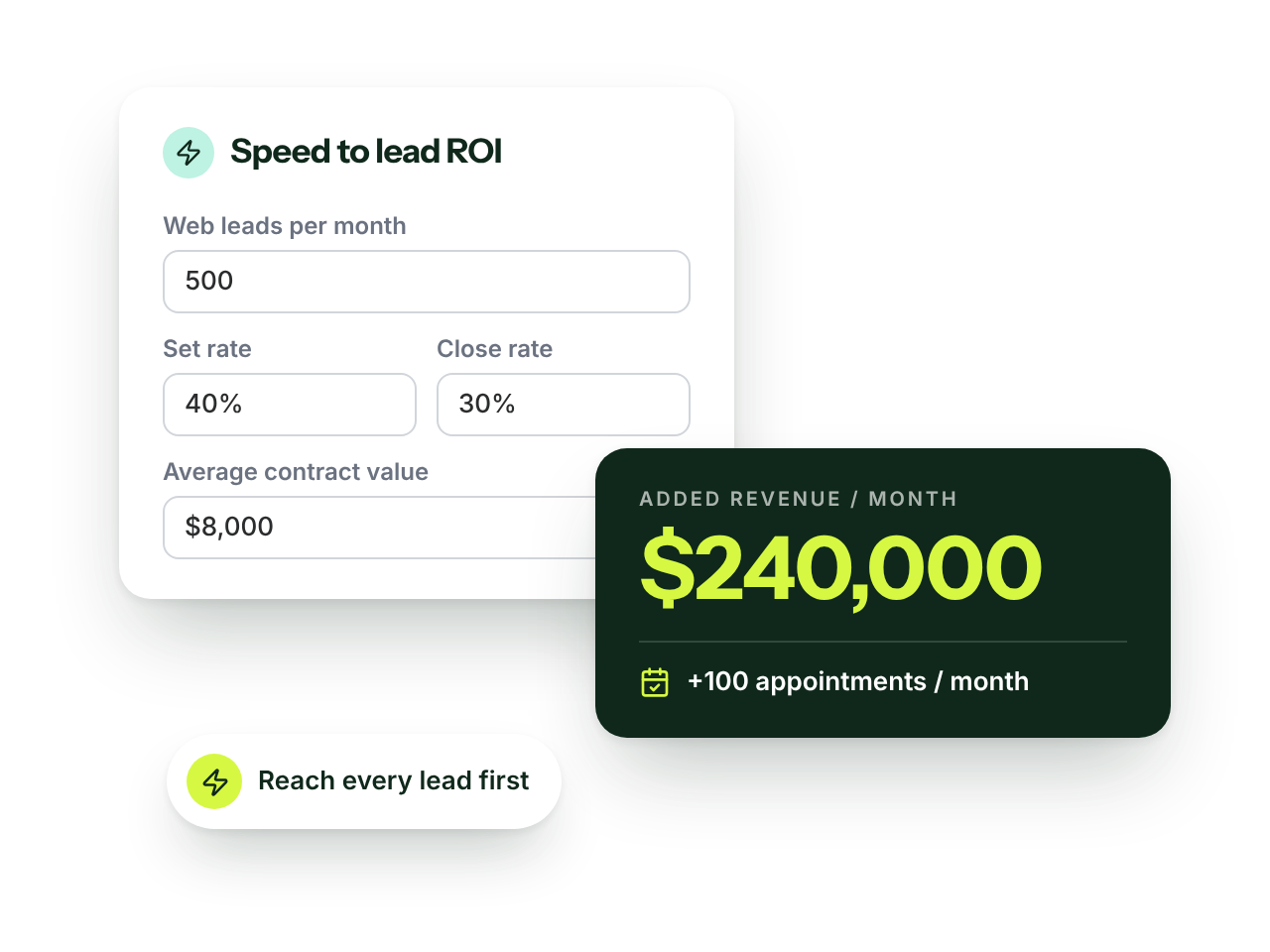
Response time is one of the clearest predictors of whether a lead converts. The following statistics show how quickly home improvement companies need to respond and what happens when they do not.
1. 78% of customers buy from the first company that responds
This finding from Kixie research establishes a core principle for home services: the business that responds first typically wins the job. In a category where homeowners often request quotes from multiple contractors, speed determines who gets the opportunity to make their case.
2. Responding within 5 minutes increases lead conversion by 391%
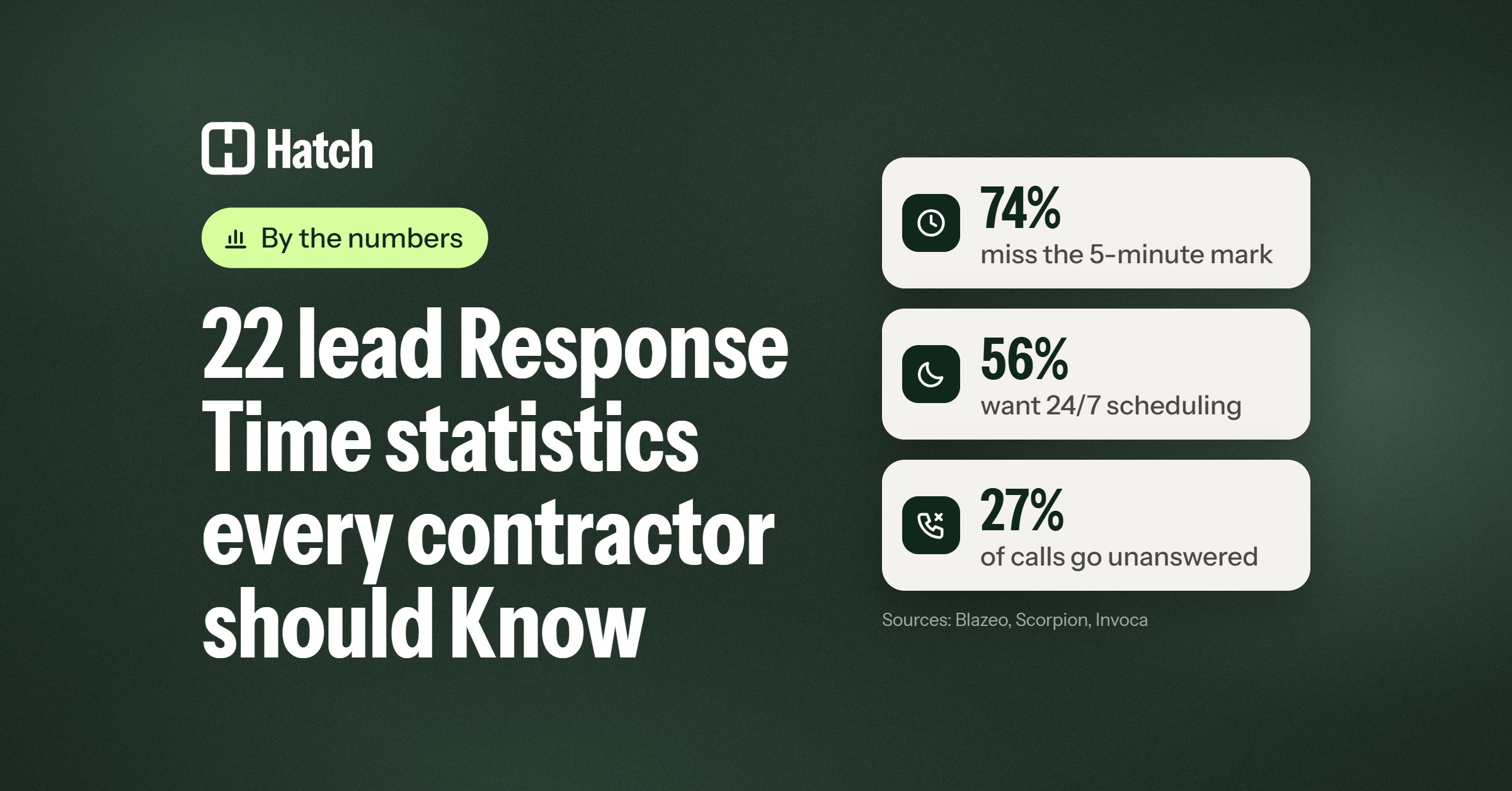
Five-minute response times produce nearly four times the conversion of slower responses. This finding applies across industries but is especially relevant for home services, where customers often contact multiple providers at once and choose whoever answers first.
3. A 5-minute response makes you 21 times more likely to qualify a lead than a 30-minute response
Research on lead qualification rates shows that the difference between 5 minutes and 30 minutes is not linear. Waiting even half an hour drops your probability of qualifying the lead by a factor of 21.
4. Reaching leads within one hour makes you 7 times more likely to have a meaningful conversation with a decision maker
Harvard Business Review research found that contacting leads within one hour increases the likelihood of a meaningful conversation with a decision maker by a factor of seven compared to waiting longer. For home improvement, where the homeowner is often the decision maker, this window matters.
5. 50% of buyers choose the vendor that responds first
Beyond the 78% statistic, separate research finds that half of all buyers simply choose the first vendor to respond. The implication: speed to lead is not just about qualification but about winning the job outright.
Follow-up persistence statistics
Speed gets you in the door. Persistence keeps you in the conversation. The following statistics show how many follow-up attempts are typically required and how quickly most salespeople give up.
6. 80% of sales require at least 5 follow-up contacts after the initial meeting
The National Association of Home Builders and Builder Lead Converter report that four out of five sales require five or more follow-up touches after the initial contact. This is the baseline for what follow-up actually requires.
7. Only 2% of sales are made on the first contact
The flip side of the persistence requirement: 98% of sales require follow-up. Closing on the first call or visit is rare. The job is almost always won or lost in what happens after.
8. 44% of salespeople give up after one follow-up attempt
Despite the evidence that persistence pays, nearly half of salespeople stop after a single follow-up. This creates a structural advantage for businesses that build follow-up into their process.
9. Only 8% of salespeople follow up more than 5 times
If 80% of sales require five or more touches, but only 8% of salespeople actually follow up that many times, most opportunities are abandoned before they have a chance to convert. This is where sales follow-up becomes critical as a competitive advantage.
10. 95% of all converted leads are reached by the sixth call attempt
Research from Velocify shows that the sixth attempt is often the turning point. If you stop at five, you leave converted deals on the table.
11. 92% of salespeople give up after the fourth call, yet 60% of customers say no four times before saying yes
The mismatch is stark: most salespeople quit right before the customer was ready to buy. In home improvement, where projects are often large purchases requiring consideration, this pattern is especially common.
12. On average, it takes 8 follow-up calls to reach a prospect
Eight attempts is the average required to actually connect with a prospect. This does not mean every lead requires eight calls, but it establishes the persistence level needed across a pipeline.
13. High-growth organizations report 16 touchpoints per prospect within a 2- to 4-week span
The Sales Development Benchmark Report shows that high-growth companies average 16 touchpoints over two to four weeks. This is what consistent pipeline management looks like.
14. Closing a custom home lead typically requires 12 to 15 follow-up touches over 6 to 18 months
For larger projects like custom homes, the follow-up timeline extends to 12 to 15 touches over six months to a year and a half. The longer the sales cycle, the more important systematic follow-up becomes.
After-hours and timing statistics
Customers do not only reach out during business hours. These statistics show when demand arrives and what happens when no one is there to respond.
15. 41% of jobs booked online come in after hours
Jobber and Housecall Pro data shows that more than four in ten online bookings arrive when most businesses are closed. For companies without after-hours response capability, this is demand that sits until the next business day.
16. 86% of consumers do not answer calls from numbers they do not recognize
Hiya research found that most consumers screen unknown calls. For outbound follow-up, this means businesses need strategies beyond phone calls alone, whether that is text, email, or branded caller ID.
Multi-channel communication statistics
Phone calls matter, but they are not the only channel. The following statistics show how text and email fit into an effective follow-up strategy.
17. Sales teams using 3 or more touchpoint types have 28% higher marketing lead to sales lead conversion rates
The Sales Development Benchmark Report found that multi-channel outreach produces better conversion than single-channel approaches. Combining phone, text, and email performs better than any one channel alone.
18. Prospects who receive text messages have a 40% higher conversion rate
Velocify research shows that leads who receive texts convert at significantly higher rates than those contacted only by phone or email.
19. Texting someone after making initial contact leads to 112.6% higher lead-to-engagement conversion
Beyond initial contact, texting after an initial conversation more than doubles engagement. This suggests text works especially well as a follow-up channel rather than a first touch.
20. Text messages have a 98% open rate
The 98% open rate for text messages far exceeds email, which typically sees open rates in the 20% to 30% range. Messages sent by text are almost always seen.
For businesses managing follow-up across multiple channels, Messaging AI can automate text and email outreach while keeping conversations organized in one place.
{{in-line-cta}}
Customer expectation statistics
Homeowners have specific expectations about how contractors communicate. These statistics show what customers value and how communication affects their decisions.
21. 70% of homeowners would pay more for a contractor with a better service reputation
Housecall Pro research found that seven in ten homeowners would pay a premium for better service. Reputation, built in part through responsive communication, has monetary value.
Lead reactivation statistics
Not every lead converts on the first attempt. These statistics show what happens when businesses reach back out to leads that went cold.
22. Lead reactivation campaigns can recover 15% to 25% of "dead" leads
Builder Lead Converter research shows that systematic reactivation of dormant leads can bring back 15% to 25% of opportunities previously written off. For businesses with aged databases, reactivation represents potential revenue from leads already paid for.
For companies looking to automate reactivation outreach, Journey Builder can create automated conversation flows that re-engage past leads without requiring manual effort from the team.
23. 66% of consumers continue researching after reading positive reviews
According to BrightLocal's 2026 survey, 66% of consumers are more likely to conduct additional research than immediately make a purchase or booking after reading a positive review. For home improvement companies, this highlights why an interested homeowner may not schedule a consultation immediately. Follow-up can provide project examples, answer questions, and help customers evaluate their options while they are still researching.
24. 54% of consumers visit a business's website after reading positive reviews
BrightLocal found that 54% of consumers visit a company's website after reading favorable reviews. For contractors, the website is an important step between initial interest and a sales conversation. Follow-up emails and texts can direct interested homeowners to relevant project galleries, service details, or information that helps them move toward requesting an estimate.
25. 85% of consumers are more likely to use a business after reading positive reviews
The 2026 Local Consumer Review Survey found that 85% of consumers are more likely to use a business after reading positive reviews. For home improvement companies, customer testimonials and completed-project feedback can support follow-up conversations, particularly when homeowners are comparing multiple contractors before committing to a project.
What the data means for home improvement companies
The statistics in this report point to a consistent set of conclusions:
- Response time is a competitive advantage. The businesses that respond fastest win a disproportionate share of jobs, regardless of other factors.
- Persistence pays. Most sales require multiple follow-ups, but most salespeople give up early. The businesses that build systematic follow-up into their process will convert more of the pipeline they already have.
- Missed calls are missed opportunities. With callers unlikely to leave voicemails or try again, call coverage directly affects revenue.
- After-hours demand is real. A substantial portion of customer requests arrive outside business hours. Businesses without after-hours response capability are leaving demand on the table.
- Multi-channel outreach works better. Text, email, and phone together produce better results than any single channel.
- Dead leads can come back. Reactivation is not about working bad leads harder; it is about reconnecting with people whose timing was not right the first time.
For home improvement companies looking to improve follow-up, the question is not whether these patterns matter but how to address them consistently across the customer lifecycle. Platforms like Hatch help service businesses manage customer conversations across voice, text, email, and web, from the first inquiry through booking, follow-up, and ongoing customer relationships.